songwritingchorusmelody

How to Write a Chorus That People Actually Remember

March 26, 2026·4 min read
How to Write a Chorus That People Actually Remember

You can get away with a mediocre verse. A weak bridge won't ruin a song. But a forgettable chorus is a song people won't come back to.

The chorus is the destination. Everything else, the verse, the pre-chorus, the build, exists to justify why the chorus is there. If the destination isn't worth the trip, nothing else matters.

Here's how to write a chorus that earns its place.

Say one thing

The biggest mistake in chorus-writing is trying to say too much.

A great chorus has a single idea. Not a summary of the whole song. Not multiple emotions layered together. One thing, the most essential, irreducible truth of what the song is about.

"I Will Always Love You." "We Don't Talk Anymore." "Shake It Off."

Each of those is a complete thought that can be spoken in a single breath. If your chorus requires two sentences to capture its idea, it's trying to do too much. Cut until you find the thing underneath.

Start high, stay high

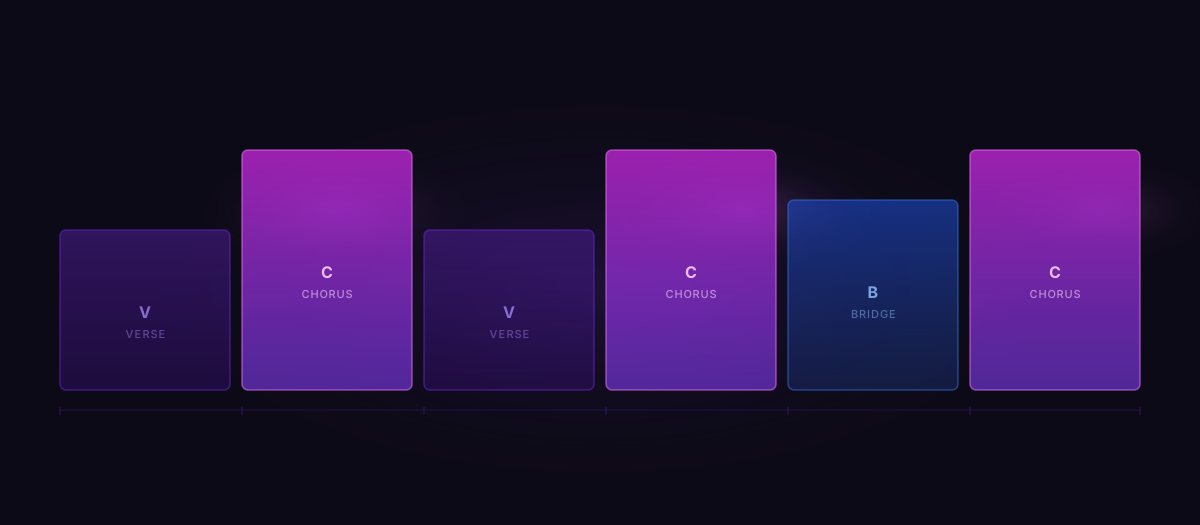
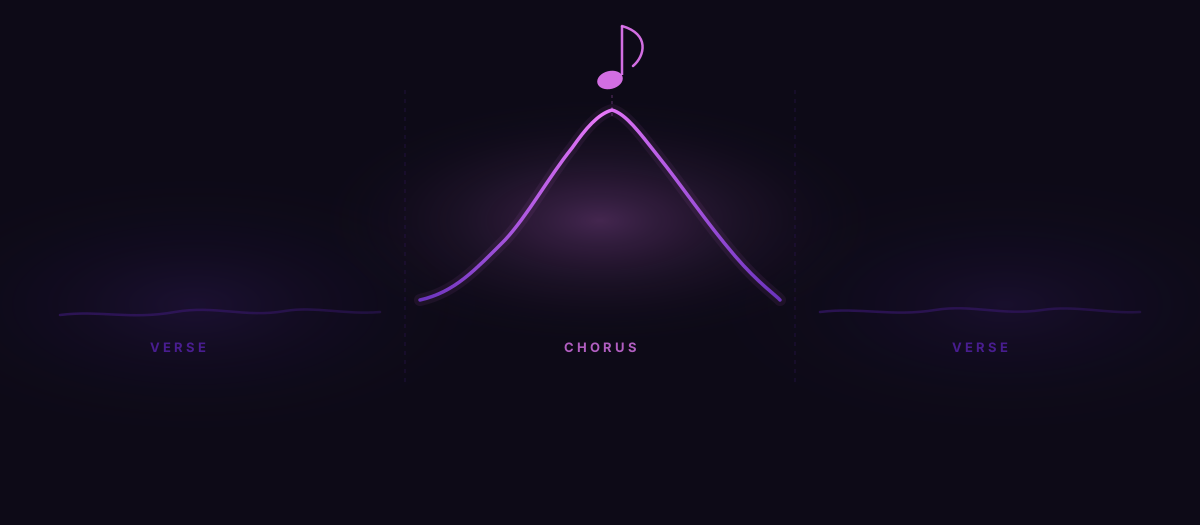
Choruses work because they break the energy level of the verse. Verses tend to be lower in pitch, more conversational, closer to speech. When the chorus hits, something should lift, the volume, the density, the register.

The most common mistake is writing a chorus at the same melodic height as the verse. If the highest note of your verse and the highest note of your chorus are the same, there's nowhere for the emotion to go.

Push the chorus up. Use the notes you've been saving. If the verse tops out at the fifth, let the chorus reach the octave.

For a deeper look at what creates that sense of melodic height and emotional arc, the difference between a good melody and a great one breaks down the same principles.

The title moment

In most well-known songs, the title appears in the chorus, usually at the very beginning or at the end, as the line everything resolves to.

There's a reason for this: the title is the conceptual center of gravity. When it lands at an emotionally peak moment, the listener links that feeling to those words permanently. That's what creates the hook.

If your song's title doesn't appear in the chorus, ask whether it should.

Nail the vowels on the peak notes

This is technical, but it makes an enormous difference in singability.

When you hit the highest note of your chorus, the emotional peak, what vowel is on that note?

Open vowels (A, O, E as in "say," "go," "feel") ring out. They carry. They feel big. Closed vowels and consonant clusters (N, M, NG endings) choke the note, the sound can't fully open.

Listen to "And I, I, I, I will always love you." Every high note sits on an open vowel, on purpose. It's worth adjusting a word or two to get the right vowel on the right note. This isn't cheating; it's craft.

Contrast is the chorus's best friend

The chorus should feel different from the verse. Not just higher, different.

Rhythmically: if the verse is wordy and dense, the chorus should breathe. If the verse is spacious, the chorus can be more urgent.

Dynamically: if the verse is stripped back, the chorus should feel fuller, more instruments, more presence.

Lyrically: if the verse is specific and narrative ("Last Tuesday when you called me"), the chorus should be universal and present tense ("I can't let go"). The verse tells the story; the chorus is how everyone feels about it.

Test it out of context

Play just the chorus for someone who hasn't heard the song. Can they feel something from those 30 seconds alone, without the verse?

A great chorus is self-contained. The verse makes it better, but the chorus should work on its own. If it only makes sense after the setup, if it requires context to feel anything, it's depending too much on what came before.


The hardest part of writing a chorus isn't technique, it's honesty. It's asking yourself whether this is actually the most important thing the song has to say, or whether you're still searching for it.

GenLyr can help you find the melody. Hum something into the app, even just the shape of the chorus you're hearing in your head, and it'll generate lyrics that fit your voice and tempo. Sometimes hearing a rough version is what shows you where the real chorus is hiding. And if you haven't locked in the hook phrase yet, writing one in under 10 minutes is a useful starting point.

Try it →